

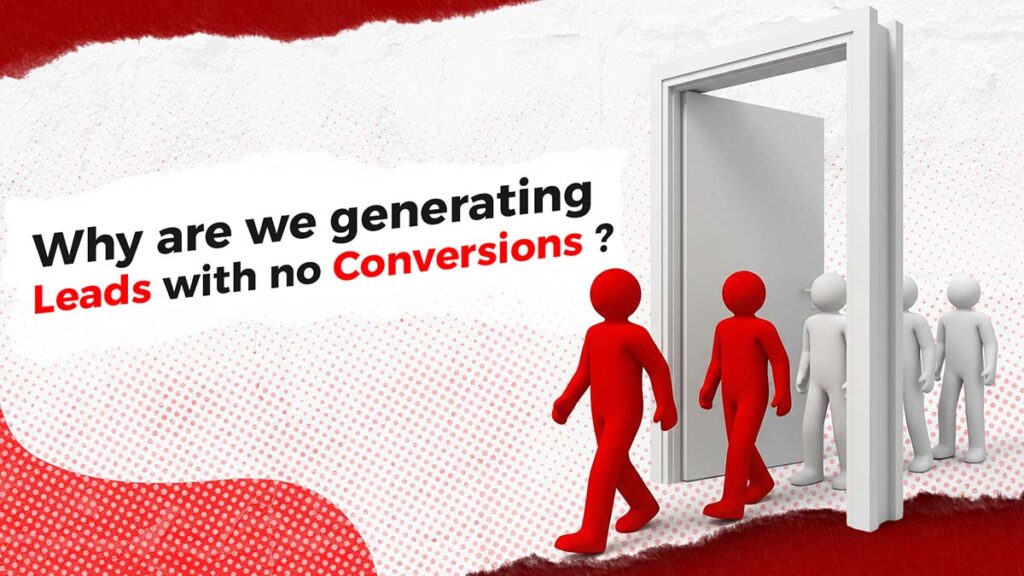
Why Your Leads Aren’t Converting
Many businesses believe that if an ad looks good, the campaign should succeed. They invest in high-quality visuals, catchy copy, and professional production — yet results don’t come. No sales, no leads, no growth.
The truth is simple: great creatives don’t save bad marketing strategies. In this article, we’ll explain why most marketing campaigns fail even with good ads, what’s really going wrong behind the scenes, and how to fix it before wasting more budget.
First: What Is a “Good” Lead Conversion Rate?
One of the biggest misconceptions in marketing is expecting 70–90% of leads to convert.
In reality, that almost never happens — unless:
- The leads are extremely warm (referrals, repeat customers)
- The product is very low-ticket
- The audience already trusts the brand
Average Lead-to-Sale Conversion Rates (2025–2026 Benchmarks)
| Industry | Average Conversion Rate |
|---|---|
| Real Estate | 1% – 5% |
| Clinics / Medical | 5% – 15% |
| Education / Courses | 5% – 12% |
| E-commerce (cold traffic) | 1% – 3% |
| High-ticket services | 2% – 8% |
So if you’re converting 8–12% in many industries, you’re already performing above average.
If you expect 80% conversion, you’re not measuring marketing — you’re imagining referrals.

The Real Reasons Your Leads Aren’t Converting
Let’s address the real issues.
1.You’re Generating the Wrong Type of Leads
Cheap leads are not always good leads.
If your campaign is optimized only for:
- Lowest Cost Per Lead (CPL)
- Broad targeting
- Generic messaging
You may attract people who:
- Are just browsing
- Can’t afford the offer
- Aren’t decision-makers
Example:
A real estate developer generates leads at $4 each. Sounds great. But 70% of leads can’t afford the minimum unit price. CPL is low. Revenue is zero.
The issue isn’t cost. It’s qualification.
2.Your Offer Isn’t Strong Enough
Sometimes the problem isn’t traffic — it’s positioning.
Ask yourself:
- Is the value proposition clear?
- Is the offer competitive?
- Does the ad promise match the landing page?
If someone clicks because of “50% Discount” but discovers hidden conditions later, trust collapses instantly.
Conversion dies when expectation ≠ reality.
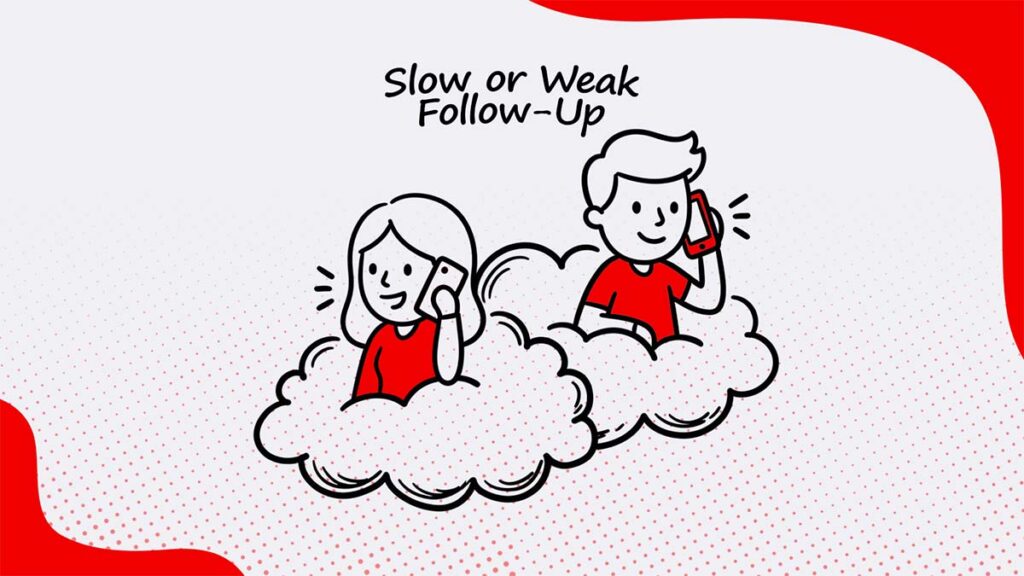
3. Slow or Weak Follow-Up
Speed matters more than most people realize.
Studies consistently show:
- Contacting a lead within 5 minutes can increase conversion rates dramatically.
- Waiting more than 24 hours can reduce close probability significantly.
If your sales team:
- Calls after 2 days
- Uses generic scripts
- Doesn’t follow up multiple times
You’re losing ready buyers.
Marketing may be working. Sales may be leaking.
4. You’re Targeting Cold Audiences Without Nurturing
Not all leads are ready to buy immediately.
There are 3 levels of awareness:
- Problem-aware
- Solution-aware
- Ready-to-buy
If you run ads to cold audiences and expect instant purchases, you’re skipping the nurturing phase.
Solution:
- Retargeting campaigns
- Email follow-up sequences
- Educational content
- Testimonials & case studies
Conversion is often a process, not a moment.
5. Your Pricing Doesn’t Match Market Reality
In volatile economies, purchasing behavior changes.
Even if leads are interested:
- Fear delays decisions
- Budget constraints increase
- Financing becomes harder
Sometimes conversion drops not because of marketing — but because of economic conditions.
Your strategy must adapt:
- Flexible payment plans
- Stronger urgency
- Clear ROI messaging
6. You Don’t Measure the Right Metrics
Many businesses track:
- Cost per lead
- Number of leads
But ignore:
- Cost per qualified lead
- Cost per acquisition (CPA)
- Sales team close rate
- Revenue per lead
Example:
Campaign A:
- CPL = $5
- Conversion rate = 2%
Campaign B:
- CPL = $10
- Conversion rate = 10%
Which one is better?
Campaign B — because revenue efficiency is higher.
Cheap leads can be expensive.
The Math That Changes Everything
Here’s a simple formula every business should know:
Leads × Conversion Rate × Average Order Value = Revenue
If:
- 1,000 leads
- 5% conversion
- $1,000 average sale
Revenue = $50,000
If conversion increases to 8% with the same leads:
Revenue = $80,000
Same leads. Different system.
Conversion optimization is often more profitable than generating more leads.
How to Fix Low Conversion Rates
Here’s the practical checklist:
Improve Lead Qualification
Use:
- Better targeting
- Pre-qualifying questions
- Clear pricing in ads (when possible)
Align Marketing & Sales
- Fast follow-up
- Structured scripts
- CRM tracking
- Call recordings review
Strengthen the Offer
- Clear value proposition
- Social proof
- Transparent pricing
Build Retargeting Systems
- Follow-up ads
- Email sequences
- WhatsApp automation
Analyze Drop-Off Points
Is the problem:
- No answer rate?
- No-show appointments?
- Lost at negotiation?
Fix the stage, not the symptom.
Final Thoughts
If you’re converting:
- 5% to 12% in most industries → you’re within healthy range.
- Under 2% → investigate targeting, offer, and sales process.
- Expecting 80% conversion → reset expectations.
Marketing generates opportunity.
Sales convert opportunity into revenue.
Strategy connects both.
If your leads aren’t converting, the problem is rarely just “bad leads.”
It’s usually a system issue. And systems can be fixed.