
In digital marketing, everyone talks about “having a strong CTA,” but very few actually understand what a CTA really is. A call to action isn’t just a button at the end of a post — it’s the message that guides your audience to take the exact step you want. And when it’s done right, it can dramatically increase conversions, sales, and engagement.
Let’s break it down in a simple, clear way.
What Is a CTA? (Real Meaning)
A CTA, or Call to Action, is a short message that tells your audience what to do next.
It could be something as simple as:
- “Buy Now”
- “Download the guide”
- “Book your session today”
- “Sign up — it’s free”
But the real power of a CTA isn’t in the words themselves — it’s in the timing, clarity, and motivation behind them.
A good CTA does three things:
- Tells the user exactly what action to take
- Makes the action feel easy and valuable
- Fits perfectly with the stage of the funnel the user is in
That’s why “Learn More” works sometimes… and completely fails other times.
Why CTAs Matter
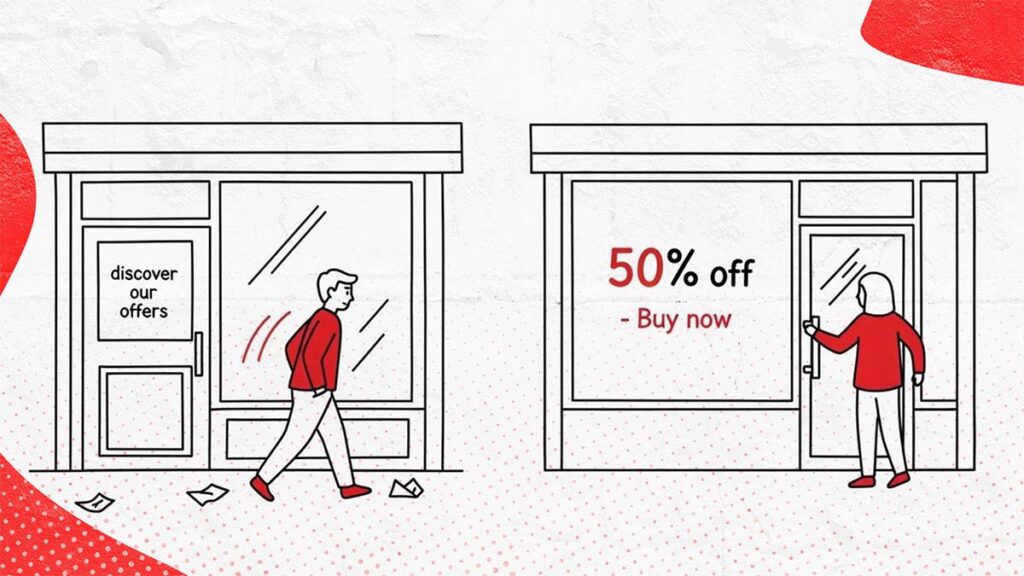
A CTA is the bridge between interest and action.
You can have:
- the best ad,
- the most engaging content,
- or the strongest offer…
but without the right CTA, the user simply scrolls.
A strong CTA can increase conversions, reduce drop-off, and guide your audience smoothly through your marketing funnel — from awareness to purchase.

Examples: Good vs. Bad CTAs
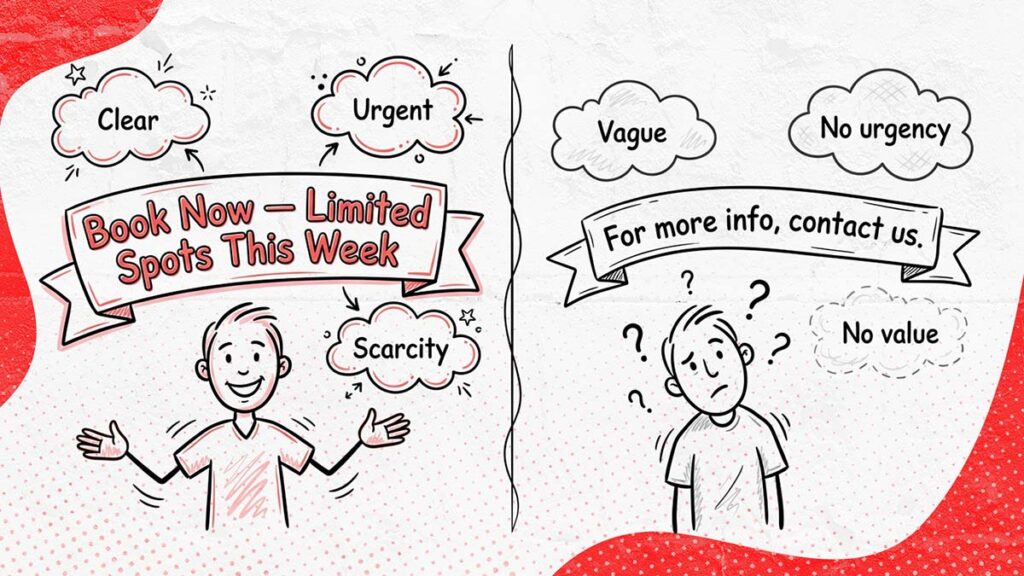
High-Converting CTA:
“Book Now — Limited Spots This Week”
This CTA is:
- Clear
- Urgent
- Tells the user exactly what they get
Weak CTA:
“For more info, contact us.”
This CTA is:
- Vague
- No urgency
- No direction
- No value
Types of CTAs (and When to Use Each)
1. Lead Generation CTAs
Used to collect leads or build your email list.
Examples:
- “Get Your Free Trial”
- “Download the Checklist”
- “Claim Your Free Consultation”
When to use:
Top or middle of the funnel, when people are still exploring.
2. Sales & Conversion CTAs
Designed to drive immediate purchases.
Examples:
- “Shop Now”
- “Add to Cart — 20% Off Today”
- “Book Your Appointment”
When to use:
When your audience already knows your brand or offer.
3. Engagement CTAs
Great for increasing interaction with content.
Examples:
- “Save this post”
- “Comment your opinion”
- “Share with a friend”
When to use:
To strengthen engagement and algorithm signals.
4. Retargeting CTAs
Used to bring back warm users who already showed interest.
Examples:
- “Complete Your Order”
- “Still Thinking About It? Get 10% Off”
- “Your Cart Is Waiting”
When to use:
Bottom of the funnel — perfect for high-intent users.
Why Most Brands Get CTAs Wrong
Most brands make one of these mistakes:
1. Using the same CTA for everything
“Learn More” is not a universal solution.
2. Not matching the CTA with the user’s stage
You can’t ask cold audiences to “Buy Now.”
3. Not giving a reason to take action
A CTA should feel rewarding — not pushy.
4. Being vague or confusing
If the user has to think twice, the CTA has already failed.
How to Create a High-Converting CTA
Here’s the formula used by top marketers:
Clear Action + Value + (Optional) Urgency
Example:
- “Book Today — Free First Session”
- “Download Now — No Sign-Up Needed”
- “Start Your Free 7-Day Trial”
This combination tells the user:
what to do, why to do it, and why to do it now.
Final Thoughts
A CTA is more than a button — it’s the final push that turns attention into action.
When you understand what a CTA really is, use the right type at the right time, and match it with a strong offer, your conversions and sales can skyrocket.
Get the CTA wrong… and even the best campaign won’t deliver results.
Get it right… and every piece of content becomes a selling machine.