

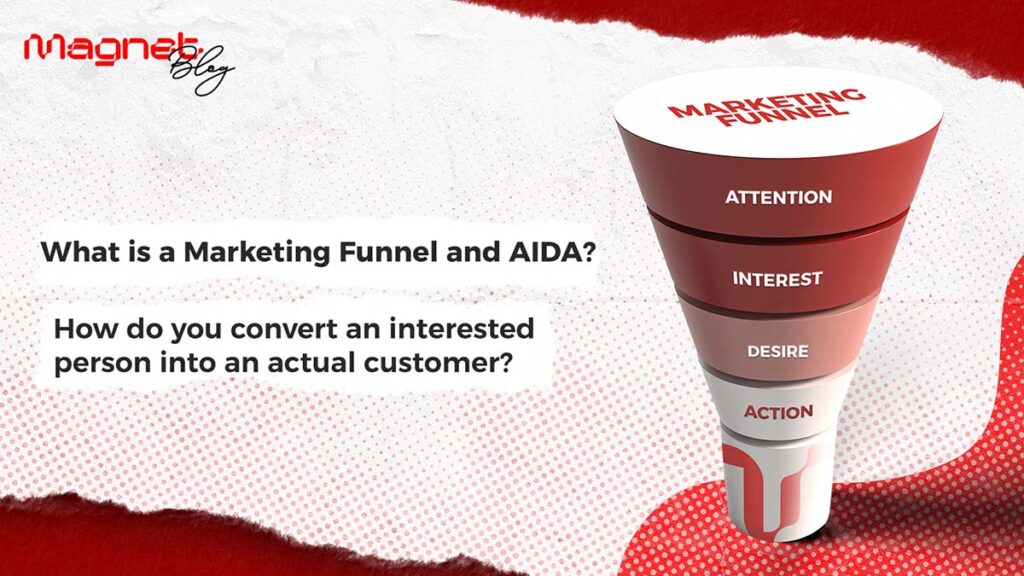
In today’s competitive digital world, every successful marketing strategy is built around understanding one essential concept — the marketing funnel. This model helps you visualize your customer’s journey, from the moment they first discover your brand to the point where they finally take action, like making a purchase or booking a service.
One of the most effective and time-tested versions of the marketing funnel is the AIDA model, which stands for Attention, Interest, Desire, and Action. These four steps describe how people move from awareness to conversion, helping marketers create messages that truly resonate with their audience.
Let’s break it down.
Attention – Capture Their Focus
The first stage of the marketing funnel is all about grabbing attention.
At this point, potential customers may not even know your brand exists — so your goal is to make them notice you.
This can be done through:
- Eye-catching social media ads
- Engaging blog headlines
- Influencer collaborations
- Educational or entertaining content
Example:
Imagine a fitness brand posting a short, powerful video that starts with “Still struggling to see results after hours in the gym?” — that instantly catches attention and speaks directly to a problem many people have.
Goal: Make people stop scrolling and pay attention to your message.
Interest – Build Curiosity and Value
Once you have their attention, the next step is to build interest by offering value.
Your audience wants to understand how your product or service fits their needs.
You can do this by:
- Sharing informative blog posts or videos
- Highlighting benefits instead of just features
- Using storytelling that connects emotionally
Example:
The same fitness brand could share short posts explaining how personalized nutrition plans can help users finally see results. This adds value and builds credibility.
Goal: Keep potential customers engaged and wanting to know more.
Desire – Create Emotional Connection
At this stage, your audience is already interested, but they need a push to actually want what you offer.
The key here is emotion — people make buying decisions emotionally before they justify them logically.
You can create desire by:
- Sharing customer success stories or testimonials
- Showing before-and-after results
- Offering limited-time deals or exclusive bonuses
Example:
“Sarah lost 10 kg in 3 months with our customized plan — and you can too.” — This builds desire by showing real-life proof and achievable results.
Goal: Make the audience visualize themselves enjoying the benefits of your product or service.

Action – Turn Interest into Conversion
Now it’s time to turn that desire into a real action — a sign-up, a booking, or a purchase.
Even a highly interested person might hesitate without a clear and simple next step.
Encourage action by:
- Adding a clear CTA (Call to Action) like “Book Now” or “Start Your Free Trial”
- Simplifying your checkout or contact process
- Offering reassurance like money-back guarantees or customer support
Example:
“Join now and get your first month free — limited offer.” — A strong call to action with a sense of urgency helps convert interest into results.
Goal: Remove friction and guide the customer toward taking the final step.
How to Apply AIDA to Your Marketing Strategy
If you want to build a stronger marketing funnel, start by mapping your content to each stage of AIDA:
| Stage | Type of Content |
|---|---|
| Attention | Social media ads, blog headlines, video hooks |
| Interest | Educational content, guides, email newsletters |
| Desire | Testimonials, case studies, product demos |
| Action | Landing pages, special offers, strong CTAs |
The secret is consistency — every stage should lead naturally to the next. A well-structured funnel ensures that your audience doesn’t just stop at interest but continues all the way to action.
Turning Interest into Paying Customers
To convert someone from “interested” to “customer,” remember three golden rules:
- Follow up: Use retargeting ads or emails to remind people who engaged with your content.
- Build trust: Share proof, reviews, and transparent information about your offer.
- Simplify the process: Fewer steps = higher conversions. Make it easy to act.
When you apply the AIDA model correctly, you’re not just selling — you’re guiding your audience through a meaningful journey that turns attention into loyalty.
Final Thoughts
The marketing funnel and AIDA model are more than just marketing theories — they’re powerful frameworks that help you connect, engage, and convert. By understanding what your audience feels and needs at each stage, you can design campaigns that not only attract attention but also build lasting customer relationships.